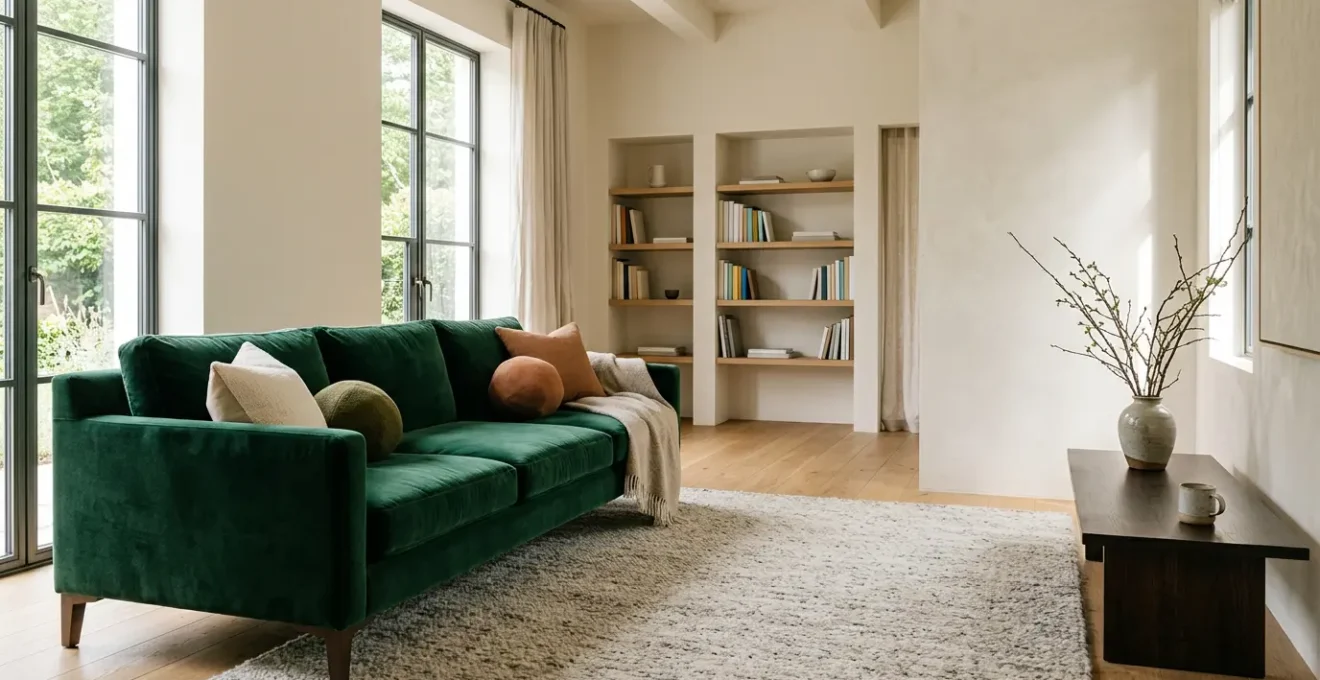
Contrary to popular belief, choosing a kid- and pet-proof luxury sofa has little to do with ‘miracle fabrics’ or high thread counts.
- True durability comes from understanding a fabric’s structural integrity, like its weave and weight, not its surface feel.
- The most important number isn’t thread count; it’s a technical specification called the Martindale rub count, which measures abrasion resistance.
Recommendation: Stop guessing and start asking for technical specs. Learning to read them like an industry insider is the only way to make an investment that lasts a lifetime, not just until the next spill.
As a designer and a parent, I know the dilemma intimately. You’ve finally reached a point where you can invest in that dream sofa—the one with elegant lines and sumptuous fabric you’ve seen in magazines. But then, reality hits. You picture muddy paws, sticky fingers, and the inevitable spilled juice box. The fear of a five-figure piece of furniture being destroyed in months makes you second-guess everything. The common advice is to opt for “performance fabrics” or default to dark colors, but this often feels like a compromise, sacrificing the very luxury you desire.
The conversation often revolves around brand names or generic material types like leather or microfiber. But what if the secret to a truly resilient yet beautiful home wasn’t in choosing a specific fabric, but in understanding the language of textiles? What if you could look at any fabric sample and know, with confidence, how it will perform against the beautiful chaos of family life? The truth is, the metrics that define true durability are often hidden in technical spec sheets, completely ignored by most salespeople and consumers.
This isn’t another list of “top 5 durable fabrics.” This is a masterclass in textile forensics for the discerning homeowner. We are going to move beyond the myths and empower you with the knowledge to decode upholstery like a professional. You’ll learn why thread count is a useless metric for sofas, how to read abrasion scores, and why the right linen is a better long-term investment than almost any other material. Forget fear; it’s time to get educated and buy with confidence.
This guide breaks down the essential professional insights you need to make a smart, stylish, and durable choice. Follow along as we explore the key factors that determine whether a luxury fabric will stand the test of time in a real-world family home.
Table of Contents: Decoding Durable Luxury Upholstery
- Velvet vs Performance Linen: Which Hides Cat Hair Better?
- How to Read “Martindale Rub Counts” Like a Textile Pro?
- The “Dry Clean Only” Mistake That Ruins Sofa Covers
- How to Apply Stain Guard Without Changing Fabric Feel?
- Why Is Thread Count Irrelevant for Upholstery Durability?
- Why Does Your “Comfy” Deep Sofa Cause Chronic Hip Pain?
- French vs Baltic Linen: Is There a Tangible Difference in Quality?
- Why Is European Linen Worth the Investment for Bedding Longevity?
Velvet vs Performance Linen: Which Hides Cat Hair Better?
The debate between velvet and linen often comes down to aesthetics, but for a pet owner, the real question is performance. Let’s be direct: when it comes to pet hair, there is a clear winner. While performance linen is durable, its flat, woven texture acts like a net, trapping fur within the fibers. Velvet, on the other hand, uses a different principle entirely: optical camouflage. Its power lies in its structure.
Velvet is a pile fabric, meaning it has thousands of tiny, upright fibers that create a three-dimensional surface. This depth creates a play of light and shadow that naturally breaks up the visual line of pet hair, dust, and other small debris. Instead of sitting starkly on a flat surface, fur gets lost in the texture. Furthermore, the short, dense pile lacks the tempting loops of a basket weave, making it less attractive for cat claws. A cat looking to scratch is often drawn to textures where its claws can hook and pull—a feature that velvet simply doesn’t offer.
As you can see, the dense pile isn’t just for a luxurious feel; it’s a functional advantage. This structural difference is why a velvet sofa can look pristine moments after a cat has napped on it, while a woven fabric would require immediate vacuuming.
Real-World Test: From Fur Magnet to Flawless Velvet
A homeowner struggled with a textured woven sofa that became a magnet for pet hair and a prime target for cat scratching due to its basket weave. They chose to reupholster it in a high-quality navy performance velvet. The transformation was immediate. The new velvet surface stayed spotless and resisted fur adhesion, even with multiple cats lounging on it daily. In contrast, the original fabric had been impossible to keep clean and was visibly damaged from clawing, proving that fabric structure is more important than color for hiding the evidence of pets.
How to Read “Martindale Rub Counts” Like a Textile Pro?
If you only learn one technical term today, make it this one: Martindale rub count. This is the single most important metric for determining an upholstery fabric’s durability, and it’s a non-negotiable piece of information I demand for every project. The Martindale test is a standardized process where a machine rubs a piece of fabric with a set amount of pressure in a figure-eight motion. The “rub count” is the number of cycles the fabric endures before it shows a noticeable change, like yarn breakage or significant pilling.
For a home with kids and pets, you need to think beyond decorative standards. Here’s a simple breakdown of what the numbers mean for you:
- 10,000 – 15,000: Decorative use only. Think cushions or headboards. This will not survive in a family living room.
- 15,000 – 25,000: Light domestic use. Suitable for a formal, seldom-used chair.
- 25,000 – 30,000: General domestic use. This is the absolute minimum for a main family sofa.
- 30,000+: Heavy-duty domestic use. This is the sweet spot for homes with active kids and pets.
- 50,000+: Commercial grade. This offers peace of mind and is what I often specify for high-traffic family areas.
However, the rub count isn’t the only factor. A fabric can have a high Martindale score but still look terrible if it pills excessively or its seams split. A true professional assesses the complete picture.
Your Professional Fabric Assessment Checklist
- Confirm the Martindale Count: Aim for a minimum of 25,000 for family sofas, and ideally over 50,000 if pets are part of the equation.
- Request the Pilling Resistance Rating: Ask for the ISO 12945 score. It’s rated on a scale of 1 to 5 (5 being the best). A high rub count is meaningless if the fabric turns into a pilled mess after a few months. Aim for a 4 or 5.
- Verify Seam Slippage Resistance: This test ensures the yarns won’t pull apart at the seams under tension. It’s critical for tightly upholstered, modern furniture frames.
- Assess Tensile Strength: This measures the force required to tear the fabric. For heavy-use seating, a tensile strength of over 500 Newtons is a good benchmark to prevent splitting.
- Check for Colorfastness: A durable fabric that fades in the sun isn’t durable at all. Ensure it has been tested for colorfastness to light (ISO 105) to prevent it from looking dull and old before its time.
The “Dry Clean Only” Mistake That Ruins Sofa Covers
That little “Dry Clean Only” tag on a sofa cover can feel like a safety net, but it’s often a trap. While it seems like the most professional and careful way to clean upholstery, traditional dry cleaning can cause irreversible damage, especially to high-end, complex fabrics. The harsh solvents used, particularly perchloroethylene, are designed to dissolve oils but can also dissolve the essential components holding your luxury fabric together.
The biggest risk is to the latex or acrylic back-coating applied to many upholstery fabrics. This invisible layer is what gives the fabric stability, prevents the weave from shifting, and stops seams from fraying. As an expert source on professional cleaning techniques warns, the solvents can degrade these critical backings. According to the technical guide from Jon-Don, a leading supplier for professional cleaners, while dry cleaning is often considered the safest method, the solvents used may damage the very adhesives or latex coatings that give the fabric its form and durability. The result? A cover that may come back clean, but is now prone to distortion, sagging, and unraveling.
So, what’s the professional alternative when a cover needs more than a spot clean? Here are the methods the experts actually use:
- Professional Hot Water Extraction: This isn’t a DIY rental machine. A trained technician uses an on-site system with pH-neutral, upholstery-specific detergents. This method cleans deeply without compromising the fabric’s backing.
- The Shrinkage Test: Before any water-based cleaning, a pro will perform this test. They’ll snip a small, precise square of fabric from a hidden area (like under a cushion), wash it as intended, and then re-measure it to ensure it remains dimensionally stable.
- Check the Zipper: This is a great insider clue. Brass zippers often signal a true “Dry Clean Only” fabric to prevent rust, whereas nylon zippers usually indicate compatibility with water-based cleaning.
- Approved Dry Solvent Cleaning: If a fabric genuinely cannot tolerate water, professionals use specific petroleum-based dry solvents (not the harsh ones from a standard dry cleaner) applied with a hand sprayer, gently agitated, and allowed to fully evaporate.
How to Apply Stain Guard Without Changing Fabric Feel?
The desire to protect a new sofa often leads to a can of aerosol fabric protector, but this is one of the biggest mistakes a luxury furniture owner can make. The problem with most topical sprays is twofold: over-application and composition. Applying too much can leave the fabric feeling stiff, waxy, or sticky, fundamentally altering the “hand” or feel that you paid a premium for. Worse, it can clog the fabric’s weave, reducing breathability and trapping dirt over time.
The superior alternative is not an after-market spray but a mill-applied, engineered protection. Technologies like Crypton or Nanotex are not coatings applied to the surface; they are integrated into the very fibers of the yarn during manufacturing. This means every single fiber is encapsulated with protection before the fabric is even woven. The result is permanent stain and moisture repellency that doesn’t change the fabric’s softness, color, or breathability. It’s an investment in built-in performance, not a temporary chemical shield. The industry is also moving towards safer chemistry. For example, leading performance fabric manufacturers have made significant changes, with Crypton fabrics transitioning to 100% PFAS-free technology since late 2022.
The difference between these two approaches is stark, impacting everything from feel to long-term environmental safety.
| Feature | Topical Spray (e.g., Scotchgard) | Mill-Applied Technology (e.g., Crypton, Nanotex) |
|---|---|---|
| Application Method | Surface coating applied after manufacturing | Engineered into yarn/fiber during production |
| Fabric Hand (Feel) | Can feel stiff or waxy if over-applied | Preserves original softness and drape |
| Breathability | May clog weave, reducing air circulation | Maintains fabric breathability |
| Durability | Wears off over time, requires reapplication | Permanent, lasts life of fabric |
| PFAS Content (Traditional) | Often contained C8 ‘forever chemicals’ | Modern versions PFAS-free (C0 silicone/acrylic-based) |
| Environmental Profile | Newer PFAS-free versions: acrylic polymer, silica nano-coatings | Built-in protection reduces chemical aftertreatment |
If you must use a topical treatment on an existing piece, the key is precision. Test a small, hidden area first—not just for colorfastness, but for feel. Apply a very light, even mist from the recommended distance. Do not saturate the fabric. Two light coats are always better than one heavy one. However, the ultimate strategy is to choose a fabric with protection engineered in from the start.
Why Is Thread Count Irrelevant for Upholstery Durability?
One of the most pervasive and damaging myths in home textiles is the obsession with thread count. We’ve been trained by the bedding industry to believe that a higher thread count equals higher quality. For bedsheets, where the goal is a smooth, soft surface against the skin, this can be a relevant (though often misleading) metric. For upholstery, it is completely and utterly irrelevant. Applying this logic to your sofa is a costly mistake.
Upholstery fabric is an engineered product designed to withstand friction, tension, and weight—not to be soft against your face. Its durability comes from a “holy trinity” of factors that have nothing to do with how many threads are packed into a square inch.
Judging upholstery by thread count is like judging a car’s power by the number of screws in its engine. It’s the wrong metric. You need to look at the engine’s displacement (yarn weight) and its design (weave structure).
– Industry analogy for fabric assessment
Instead of asking about thread count, you need to ask about these three critical factors:
- Weave Structure: This is the pattern in which yarns are interlaced. Tight weaves like twill (think denim) or plain weaves (think canvas) are inherently stronger and more stable than decorative satin or jacquard weaves. A tight weave distributes stress evenly, making it highly resistant to tearing and seam slippage.
- Fabric Weight (GSM): This is the true measure of a fabric’s substance. Measured in Grams per Square Meter (GSM) or ounces per square yard, it tells you how much fiber is actually in the material. A heavier fabric (e.g., 400+ GSM) generally uses thicker, more substantial yarns and will outlast a lightweight decorative fabric (e.g., 200 GSM) every time, regardless of thread count.
- Yarn Type & Fiber Content: The strength of the yarn itself is paramount. Thick, strong solution-dyed acrylic or polyester yarns are workhorses designed for durability and colorfastness. In contrast, a fabric with a high thread count made from fine, delicate silk or low-grade cotton yarns will be fragile and unsuitable for a family sofa.
A 200-thread-count canvas made with heavy yarn in a tight plain weave will provide decades of service, while a 600-thread-count decorative sateen will show wear in months. Stop asking about thread count and start asking about GSM and weave.
Why Does Your “Comfy” Deep Sofa Cause Chronic Hip Pain?
We’re drawn to deep, sink-in sofas for their promise of ultimate comfort. They invite you to curl up, relax, and unwind. But that same “comfy” design is often an ergonomic nightmare that can lead to chronic hip, back, and knee pain. The problem lies in a fundamental mismatch between the sofa’s dimensions and the human body’s mechanics. When a seat is too deep or too soft, it causes a cascade of postural problems.
The primary issue is that a deep seat prevents you from sitting with your back fully against the sofa’s backrest while keeping your feet on the floor. To compensate, you either slouch forward with no lumbar support or you slide down, creating a “C-slump” posture. This position rotates your pelvis backward, placing immense strain on your lower back and hip flexors. Furthermore, if the cushions are too soft, your hips sink lower than your knees. This position is not only stressful on the hip joints but also makes standing up an effort, forcing you to use your back and arms instead of your leg muscles.
The ideal seat depth should allow for 2-3 inches of space between the back of your knees and the edge of the seat cushion when your back is fully supported. This allows for proper circulation and neutral pelvic alignment. But you don’t have to sacrifice style for comfort. If you love the look of a deep sofa, you can make it work with a few ergonomic adjustments.
- Measure for Your Body: Before buying, measure your popliteal height (the distance from the floor to the back of your knee). This is your ideal seat height. A sofa that is too low will always cause strain when standing up.
- Add Firm Lumbar Support: The easiest fix is to use custom-made, firm lumbar pillows. They fill the gap between your lower back and the back of the sofa, preventing the C-slump and keeping your spine in a healthier alignment.
- Boost Cushion Density: If your cushions are too soft, you can have an upholsterer layer a 2-inch slab of high-density foam (look for an ILD rating of 35-40) on top of the existing inserts. This prevents the excessive “sink” that throws off your hip-to-knee alignment.
- Consider Bench Seating: Sofas with a single long “bench seat” cushion often provide more consistent support across the entire seating area compared to multiple down-filled cushions that can compress unevenly.
French vs Baltic Linen: Is There a Tangible Difference in Quality?
In the world of luxury textiles, provenance matters. When you see linen described as “French” or “Belgian,” it’s not just a marketing gimmick—it signifies a tangible difference in quality rooted in climate, soil, and centuries of tradition. While linen from the Baltic region (like Lithuania or Latvia) can be very good, Western European flax, particularly from France, Belgium, and the Netherlands, is widely considered the global benchmark for excellence.
The key difference lies in the length of the flax fibers and the processing methods. The unique terroir of Western Europe, with its damp ocean climate and rich soil, produces flax plants with exceptionally long staple fibers. Longer fibers create a stronger, smoother, and more lustrous yarn. When spun, this yarn results in a fabric that is less prone to pilling, becomes softer with each wash, and has a significantly longer lifespan.
This quality is protected by the prestigious ‘Masters of Linen’ designation. This certification guarantees that the linen is made from 100% Western European-grown flax and that every stage of production, from field to fabric, meets stringent environmental and quality standards. A crucial part of this tradition is “dew-retting,” a natural process where cut flax is left in the fields for weeks to let the rain and sun break down the woody stalk to release the fibers. This gentle method preserves the fiber’s strength and integrity. In contrast, faster industrial methods like water-retting or chemical-retting, sometimes used elsewhere, can weaken the fibers.
The result is that authentic French or Belgian linen often boasts a lifespan that is 10-20% longer than comparable linens from other regions. It will feel smoother from the start and develop a more beautiful, subtle patina over time. While it comes at a premium, you are paying for a measurably superior raw material and a more sustainable, time-honored production process.
Key Takeaways
- Stop looking at color and start looking at fabric structure; a velvet’s pile hides hair, while a flat weave traps it.
- The Martindale rub count is your most important metric; aim for 30,000+ for any main family sofa.
- Never assume “Dry Clean Only” is the safest option; it can destroy a fabric’s backing and structural integrity.
- Engineered, mill-applied stain protection is always superior to a temporary, after-market spray that can alter the fabric’s feel.
Why Is European Linen Worth the Investment for Bedding Longevity?
While we’ve focused on upholstery, the principles of long-term value are perfectly illustrated by European linen bedding. In a world of fast-fashion textiles, linen stands apart as a true “buy it for life” investment. When you compare it to other luxury materials, its longevity is simply unmatched. The initial cost may be higher, but its cost-per-use over its lifespan makes it one of the most economical choices you can make.
The numbers speak for themselves. While a set of high-end cotton sheets might feel luxurious for a few years, they typically begin to show wear—thinning, fading, or even tearing—within 3 to 5 years. In stark contrast, textile longevity studies show that high-quality European linen bedding can last for 20 to 30 years with proper care. It doesn’t just endure; it improves. This remarkable trait comes from the unique properties of the flax fiber itself.
Linen contains a natural binding agent called pectin. With each wash, a tiny amount of this pectin breaks down, causing the fibers to soften and become more supple without losing their inherent strength. This is why a ten-year-old linen sheet is often softer and more beloved than a brand-new one. It possesses an “anticrease gene” of sorts, getting better with age and use. This makes it an ideal choice for a home where textiles are lived in, not just looked at. To achieve this incredible longevity, however, you must follow a specific care protocol designed to protect the fibers.
- Wash in Cool Water: Use a gentle cycle with cool to lukewarm water (30-40°C / 86-104°F). Hot water can stress the natural fibers.
- Use a Gentle Detergent: Choose a pH-neutral liquid detergent without any optical brighteners or harsh enzymes, which can degrade the linen over time.
- Avoid Over-Drying: Tumble dry on a low heat setting and remove the items when they are about 80% dry. Over-drying is the number one enemy of linen, making the fibers brittle.
- Finish with Air-Drying: For best results, remove the linen from the dryer while it’s still slightly damp and let it air-dry flat. This final step enhances its natural softness and relaxed texture.
By shifting your focus from fleeting trends to the science of durability, you can finally choose furniture with confidence. Armed with this knowledge, you can build a home that is not only beautiful and luxurious but also perfectly equipped to embrace the joyful reality of family life.