Creative trends
Interior design has transcended simple aesthetics to become a multidisciplinary field intersecting with investment strategy, structural engineering, and digital technology. Navigating the current landscape of creative trends requires more than just an eye for color; it demands an understanding of longevity, spatial dynamics, and the psychological impact of our environments.
Whether you are a novice looking to refresh a living room or an enthusiast planning a structural renovation, understanding the mechanics behind these trends is crucial. This resource explores the foundational shifts in the creative market, offering a comprehensive look at how to make informed decisions that balance beauty with functionality and financial prudence.
The Economics of Decor: Investing vs. Consuming
One of the most critical shifts in modern design is the move away from « fastdecor » toward investment-grade pieces. Understanding the lifecycle of furniture and art is essential to avoid assets that depreciate immediately upon purchase. The allure of the « ColoroftheYear » or fleeting fads can often lead to interiors that feel dated within months. A strategic approach involves distinguishing between a six-month fad and a ten-year macro trend.
Value Retention and the Vintage Market
Smart collecting involves recognizing why certain pieces hold value while others do not. While modern reproductions offer accessibility, they rarely offer a return on investment. Vintage originals and designer furniture, when maintained correctly, often retain or increase in value. Knowing when to sell and how to identify high-quality craftsmanship is key to building a collection that serves as an asset rather than an expense.
Mastering Scale: Large Art and Sculptural Installations
Integrating large-scale art into residential spaces is a powerful way to signal luxury and intentionality, often more effectively than furniture. However, moving from standard wall art to oversized sculptures or suspended mobiles introduces complex logistical challenges. It is not merely about aesthetics; it is about engineering and spatial flow.
Structural and Acoustic Considerations
Installing a 200kg sculpture or a massive metal artwork requires precise planning regarding ceiling integrity and rigging mechanisms. Beyond the weight, large hard surfaces can create acoustic anomalies in a home, necessitating thoughtful sound management strategies. Furthermore, the visual impact must be balanced to avoid the claustrophobia that comes from over-filling high ceilings. The choice between a floor statue and a suspended mobile, for instance, significantly impacts floor traffic and the breathable volume of a room.
Engineering Nature: The Biophilic Standard
Biophilic design has evolved from a stylistic preference to a recognized standard for well-being, directly influencing sleep quality and stress levels through elements like fractal patterns. However, bringing nature indoors, especially on a large scale, is technical. A living wall is not just decoration; it is a living plumbing system that carries risks of leaks and mold if not properly executed.
Technical Implementation of Living Walls
Success with vertical gardens depends on understanding the nuances between irrigation systems—recirculating versus direct plumbed—and the specific light requirements of plants like ferns versus pothos. In low-light urban apartments, hiding grow lights effectively prevents the space from looking like a laboratory. For those wary of humidity risks or ongoing maintenance, understanding the ROI and aesthetic trade-offs between real plants, preserved moss, and biomimicry is essential for a sustainable installation.
The Renaissance of Natural Fibers: Rattan and Macramé
The resurgence of materials like rattan and macramé speaks to a desire for tactile warmth and acoustic softening in modern, often echoey, spaces. Yet, incorporating these textures without falling into the « 70strap » or creating a dated look requires a contemporary approach to styling and maintenance.
Material Durability and Styling
Whether choosing between cotton and jute for a wall hanging or distinguishing between natural rattan and PE wicker for a transitional space, the material properties matter. Natural fibers react to their environment; humidity balance is critical to prevent rattan from cracking or molding. Similarly, knowing how to anchor heavy macramé pieces safely into drywall and how to clean dust accumulation from intricate knots ensures these installations remain pristine fixtures in the home.
Digital Pre-Visualization: AR and VR Tools
The days of guessing if a sofa will fit are over. The integration of Augmented Reality (AR) and Virtual Reality (VR) into the design process allows for precise validation of scale and flow before a single penny is spent. However, relying on these tools requires an understanding of their limitations, particularly regarding lighting accuracy and color rendering.
Leveraging Technology for Precision
From using Lidar-equipped phones to measure room dimensions to exploring VR showrooms that simulate sunlight patterns via ray tracing, technology offers a safety net for renovations. The key is knowing which tools offer genuine utility—such as checking walkway clearance or testing cabinet heights—and which are merely marketing gimmicks. Utilizing these digital assets allows for remote decision-making and helps bridge the gap between architectural blueprints and the lived experience of a home.
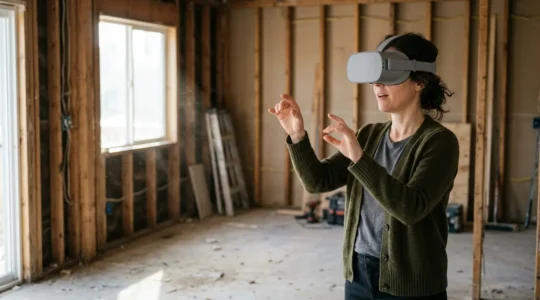
How to Use VR Showrooms to Experience Your Renovation Before Demolition?
The greatest risk in renovation isn’t the budget; it’s approving a design from a 2D blueprint you can’t truly understand, leading to costly changes or permanent regret. Virtual Reality allows you to test the real-world ergonomics of your design, like…
Lire la suite
How to Use Augmented Reality Apps to Confidently Validate Furniture Scale Before You Buy
Using augmented reality to « see » furniture in your room is easy, but trusting what you see is the hard part that determines whether you’ll love or return your purchase. Your phone’s technology (LiDAR vs. a standard camera) drastically impacts the…
Lire la suite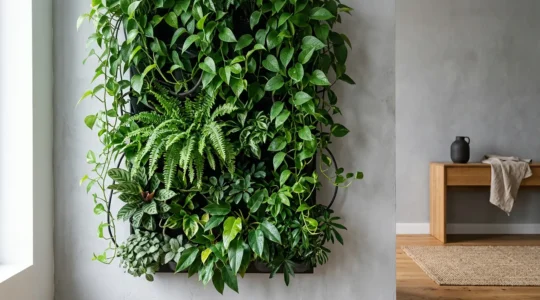
How to Maintain a Vertical Living Wall in Low-Light Apartments?
Sustaining a living wall in low light is an act of bio-engineering, not gardening; its survival depends on the systemic integrity of its life-support hardware, not just plant choice. Leaks and plant death are preempted by choosing a contained, recirculating…
Lire la suite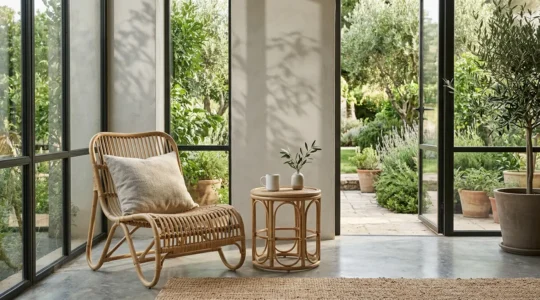
Why Is Rattan the Ultimate Material for Indoor-Outdoor Transitional Spaces?
The key to long-lasting rattan furniture isn’t where you place it, but how you understand it as a dynamic natural material. True sustainability goes beyond looks: Natural rattan is biodegradable, while synthetic PE wicker creates long-term plastic waste. Durability is…
Lire la suite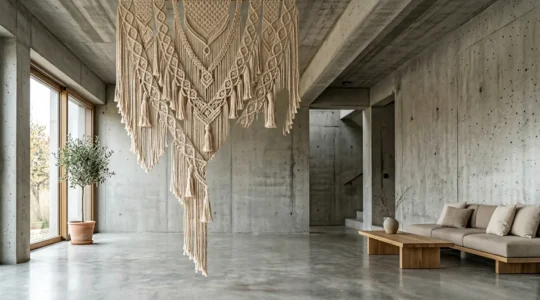
How to Use Macramé Installations to Soften Acoustics in Echoey Rooms?
Macramé is more than decor; it’s a tunable acoustic tool that can transform a room’s sonic signature by absorbing harsh echoes. The acoustic power of a macramé piece is determined by intentional choices like fiber type, knot density, and overall…
Lire la suite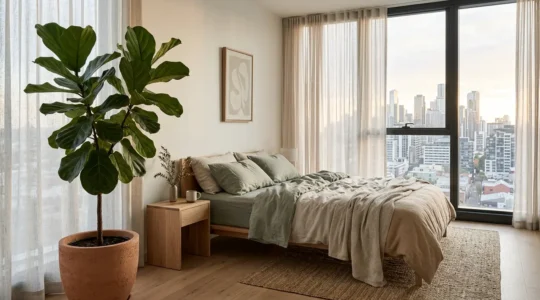
Why Does Biophilic Design Improve Sleep Quality in Urban Apartments?
Biophilic design improves sleep not by magic, but by using specific natural cues to biologically reduce stress hormones and reset your body’s internal clock. Visual exposure to natural fractal patterns has been shown to lower cortisol, the primary stress hormone….
Lire la suite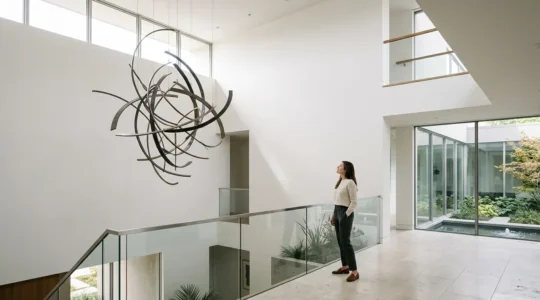
How to Install Large-Scale Art in Residential Atriums Without Sacrificing Flow and Light
The greatest challenge in placing large-scale art is not filling the void, but sculpting it; success lies in treating the installation as an architectural intervention, not mere decoration. Structural integrity is non-negotiable and requires engineering expertise to manage both static…
Lire la suite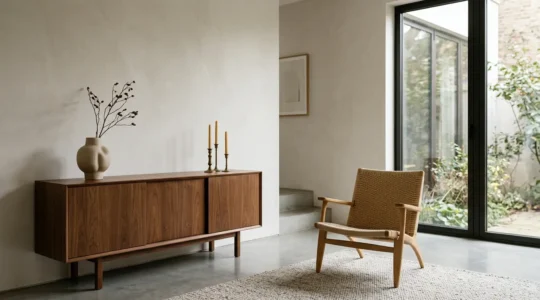
Predicting Decor Market Shifts: How to Invest in Furniture That Holds Its Value
Investing in valuable decor isn’t about buying ‘timeless’ items; it’s about decoding a trend’s origin and speed to separate fleeting hype from future classics. « Fast decor » from mass retailers is designed for obsolescence, losing most of its value almost immediately…
Lire la suite