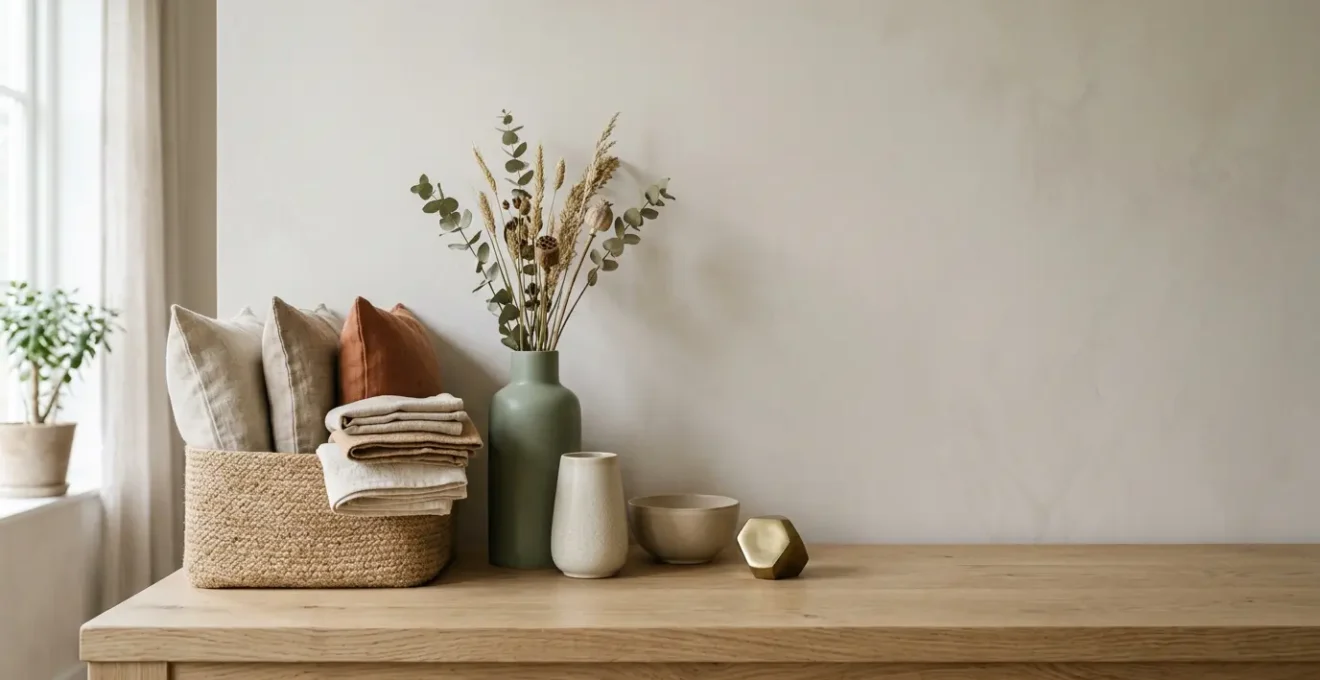
Loving seasonal decor in a tiny apartment feels impossible. The solution isn’t finding more storage—it’s adopting a smarter, clutter-free system.
- Build a “Capsule Decor” collection of versatile, high-impact items that work year-round.
- Prioritize textiles (cushion covers, throws, art) for dramatic mood changes with a minimal physical footprint.
Recommendation: Immediately implement a “one in, one out” rule for any new seasonal item to prevent clutter from ever accumulating.
You love the idea of your home reflecting the seasons—cozy in the fall, airy in the spring. But as an apartment dweller, the reality is a closet already bursting at the seams. The common advice to “use vacuum bags” or “store things under the bed” misses the point entirely: you have zero storage space to begin with. The thought of acquiring boxes of seasonal-specific decor that will spend 9 months of the year as a monument to clutter is enough to make you abandon the idea altogether.
This cycle of desire versus reality creates frustration. It feels like you have to choose between a static, unchanging home and a space overrun with things you can’t store. You see inspiration online, but it seems designed for people with garages and attics, not a 500-square-foot reality. What if the entire approach is wrong? What if the secret to seasonal decorating isn’t about accumulating more *stuff*, but about building a clever, minimalist *system*?
The key is to stop thinking about seasonal decor as a separate category of items and start thinking of it as a frictionless rotation of a small, permanent collection. This guide will walk you through creating a “Capsule Decor” system that transforms your home’s mood seasonally while fitting into a single box. We’ll explore which items give you the most impact for the least effort, how to prevent “clutter creep,” and even how these small changes can positively affect your well-being.
This article provides a complete framework for enjoying seasonal vibes without the storage nightmare. Discover how to build your core collection, master high-impact swaps, and apply simple design rules for a home that feels fresh all year long.
Summary: A Guide to Zero-Storage Seasonal Decor
- How to Create a “Capsule Decor” Collection That Fits in One Box?
- Textiles vs Knick-Knacks: Which Changes the Room Mood Faster?
- The “One In, One Out” Rule: Preventing Seasonal Clutter Creep
- When to Switch to Winter Decor to Combat Seasonal Affective Disorder?
- Why Does Changing Cushion Covers Trick the Brain into “Newness”?
- How to Master the “Rule of Three” for Coffee Table Styling?
- How to Swap Textiles Seasonally Without Creating Storage Chaos?
- How to Adapt Interiors to Seasonal Pantone Palettes Without Repainting?
How to Create a “Capsule Decor” Collection That Fits in One Box?
A “Capsule Decor” collection is the foundation of a zero-storage seasonal refresh. It’s a small, curated set of 6-10 core decorative items that are versatile enough to work in any season but impactful enough to change the mood of a room. The goal isn’t to buy new things for fall, winter, spring, and summer, but to invest in a few quality pieces that can be styled differently. Think of it like a capsule wardrobe: a few great items that create dozens of outfits.
Your capsule should be built on a base of neutral, foundational items that provide structure. A beautiful wooden tray, a stack of hardcover books, or a timeless ceramic vase can act as an anchor on a coffee table or shelf. These pieces stay out year-round. The “seasonal” part comes from the smaller, rotating elements you layer on top. With the global home decor market projected to grow from $960 billion in 2024 to over $1.6 trillion by 2030, consumers are increasingly treating decor as a long-term investment, which aligns perfectly with the capsule philosophy.
The magic is in the mix. Combine your permanent anchors with rotating textiles, botanicals (fresh or dried), and one or two small, truly special objects. This lean approach forces intentionality. Instead of a dozen generic items, you have a few things you truly love. The entire “off-season” collection—perhaps a few cushion covers and a cherished object—should easily fit into a single, small storage box.
Action Plan: Build Your Home Decor Capsule
- Core Items: Identify 6-10 core decor pieces that can work in any room to create cohesive, layered looks.
- Foundations: Include foundational pieces like trays or stacks of books to create visual bases for grounding small collections.
- Texture & Function: Add texture with versatile baskets and bins for storing throws or corralling clutter while staying organized.
- Mood Lighting: Incorporate lighting elements like a stylish table lamp to transform the atmosphere.
- Integration: Start with one surface (like a coffee table), adjust seasonally, and keep the core structure consistent.
Textiles vs Knick-Knacks: Which Changes the Room Mood Faster?
When you have limited space and energy, you need to focus on what delivers the biggest return on effort. In decorating, that means prioritizing textiles over knick-knacks. A small, cluttered shelf of trinkets requires significant effort to rearrange but often has a low overall impact on the room’s atmosphere. Textiles, on the other hand, are a high-impact, low-footprint tool for transformation.
Think about the surface area. Changing two cushion covers and a throw blanket instantly alters the color and texture profile of your largest piece of furniture: the sofa. The effect is immediate and dramatic. As the experts at Uncluttered Simplicity note, it’s about a smart cost-benefit analysis of your time and energy.
Swapping a throw blanket (low effort, high impact) versus rearranging a shelf of knick-knacks (high effort, medium impact). This provides a practical decision-making framework for the time-poor user.
– Uncluttered Simplicity, Seasonal Home Organization Tips
This principle extends beyond the sofa. A new tablecloth, a different set of placemats, or even swapping out a single piece of framed art can completely refresh a space. Rotating art is particularly effective; a print with autumnal tones can make a room feel cozier just as effectively as a pile of decorative gourds, but takes up zero cubic space when not in use. Your brain adapts to static visuals, eventually filtering them out. Introducing a new image or pattern forces your mind to see the room anew.
The “One In, One Out” Rule: Preventing Seasonal Clutter Creep
You’ve curated your perfect capsule, but the temptation to add just *one more* perfect little pumpkin for fall or a cute ceramic bird for spring is always there. This is how “clutter creep” begins. Without a firm system, your single, manageable box of seasonal decor will inevitably multiply. The solution is ruthlessly simple: the “one in, one out” rule.
This rule, borrowed from minimalist wardrobe management, is your primary defense against accumulation. If you decide to buy a new seasonal item, you must choose an existing item from your capsule to donate, sell, or discard. This forces you to critically evaluate every potential purchase. Is this new item truly better than what I already own? Does it add more value, joy, or versatility? This simple question prevents impulse buys and ensures your collection evolves in quality, not just quantity.
As the design blog Belle & June advises, this policy is essential for keeping your curated collection in check. It transforms shopping from a passive act of consumption into an active process of curation.
A strict ‘one in, one out’ policy can help keep your collections in check.
– Belle & June, Renew, Refresh, Revive
This system turns the abstract idea of “being intentional” into a concrete, non-negotiable action. It’s the operational backbone of your minimalist decor strategy, ensuring your space remains a reflection of the season, not a storage unit for it.
By treating your decor capsule as a living collection with a fixed size, you maintain control. The goal is a frictionless rotation, not a stressful battle with overflowing boxes. This disciplined swap is the only way to guarantee your system remains sustainable in a small space.
When to Switch to Winter Decor to Combat Seasonal Affective Disorder?
Changing your decor isn’t just about aesthetics; it’s a powerful tool for “mood hacking.” This is especially true during the transition to winter, when less sunlight can trigger the “winter blues” or, more seriously, Seasonal Affective Disorder (SAD). Research shows this is a widespread issue; it affects about 5 percent of Americans, with an additional 40% experiencing some form of winter melancholy. Proactively shifting your home’s environment can be a first line of defense.
Instead of waiting for a specific date, consider switching to your “winter” decor as soon as you feel your mood and energy start to dip. This means strategically deploying light and warmth. Pack away cool-toned textiles like blues and light grays and bring out warmer textures and colors: chunky knit throws, velvet cushion covers, and accents in deep reds, oranges, or even warm whites. As a leading psychiatrist explains, color and light have a direct impact on your sense of well-being.
Light colors will give you a sense of openness that helps with your day-to-day. He also suggests incorporating bright light lamps in the home, which are much brighter than normal lights.
– Dr. Asim Shah, Professor and Executive Vice Chair, Menninger Department of Psychiatry
The strategy is to amplify light and perceived warmth. Open your drapes and shades during the day to maximize natural light. In the evenings, create a cozy atmosphere by using floor and table lamps with warm-toned amber bulbs instead of harsh overhead lighting. Installing dimmers can also help you achieve a soft, comforting glow. By consciously curating a warm and comforting interior, you create a sanctuary that actively works to lift your spirits during the darker months.
Why Does Changing Cushion Covers Trick the Brain into “Newness”?
The reason swapping a few cushion covers can feel so disproportionately refreshing isn’t just about aesthetics—it’s about brain chemistry. Our brains are hardwired to respond to novelty. A new sight, sound, or texture triggers a small but satisfying release of dopamine, the neurotransmitter associated with pleasure, motivation, and reward. This is a survival mechanism that encourages us to explore our environment, but we can hijack it for our well-being.
When your decor remains static for too long, your brain learns to filter it out through a process called sensory adaptation. The beautiful vase on your shelf becomes invisible. By introducing something new—like a different color or texture on your sofa—you break that pattern. This jolt of novelty forces your brain to re-register the environment, making the whole room feel fresh and new. Scientific research confirms this powerful effect; studies show that novelty directly activates the dopamine system responsible for learning and reward.
This is the ultimate “mood hack” for apartment dwellers. You don’t need a complete overhaul to get that dopamine hit. A simple, low-effort change like swapping cushion covers is enough to trick your brain into perceiving a significant environmental shift. It’s the most efficient way to generate that “new room” feeling without buying new furniture or spending a weekend rearranging. You are leveraging neuroscience to create joy and satisfaction with minimal physical items.
How to Master the “Rule of Three” for Coffee Table Styling?
Now that you have your curated capsule items, how do you arrange them to look intentional and stylish, rather than random? The most powerful and easy-to-remember design principle is the “Rule of Three.” The rule suggests that objects grouped in odd numbers—particularly threes—are more visually appealing and harmonious to the human eye. An even number of items can look static and boring, while an odd number creates a sense of tension and visual interest that the brain finds more engaging.
To apply this to your coffee table, bookshelf, or console, think about creating a small “vignette” or visual story with three items. The key to making it work is to vary the height, shape, and texture of the objects. A classic formula involves grouping three items of different heights to create a dynamic visual triangle that guides the eye. This prevents the arrangement from looking flat.
A simple, effective vignette could follow this pattern:
- Something tall: A slender vase with a single branch, a candlestick, or a small table lamp.
- Something medium: A stack of two or three books, a small potted plant, or a decorative bowl.
- Something low: A small tray for a remote, a beautiful coaster, or a single, interesting object like a piece of coral or a small sculpture.
This simple grouping instantly looks more considered and professional than placing items separately. By mastering this single rule, you can ensure your small collection of capsule decor items is always displayed with maximum impact.
How to Swap Textiles Seasonally Without Creating Storage Chaos?
The core of the zero-storage seasonal refresh is a smart textile strategy. But even textiles can create clutter if not managed correctly. The goal is a “frictionless rotation,” and that means eliminating the bulkiest items first. The number one rule: use covers, not whole new pillows. Pillow inserts are the biggest space-hoggers. By keeping one set of quality inserts year-round and simply swapping out the covers, you reduce the storage footprint by over 90%. A dozen pillow covers can be folded to fit in a small drawer; a dozen pillows require a whole closet.
This philosophy of separating the “function” from the “fashion” applies elsewhere. You don’t need two sets of curtains; you can use lightweight curtain rings to easily clip a new panel of fabric in front of your existing ones for a layered, seasonal look. The same goes for throws; a heavy, chunky knit for winter and a lightweight linen one for summer. These simple swaps are the essence of a minimalist decorating system that rotates like a capsule wardrobe.
Minimalist decorating isn’t static; it rotates accessories like a capsule wardrobe. At each season’s start, pack away heavy blankets or holiday décor and re-introduce items that suit the light and weather.
– Our Secondhand House, 25 Minimalist Decorating Ideas
To streamline the swap, group your off-season textiles by color and style (e.g., a bag for “warm tones” and one for “cool tones”). Before packing anything away, pull out any truly multi-purpose pieces. Neutral throws, timeless vases, and picture frames can often stay out year-round, serving as the stable backdrop for your more seasonal accent pieces.
Key takeaways
- Build a “Capsule Decor” of 6-10 versatile, high-quality items to form the foundation of your seasonal system.
- Prioritize textiles (cushion covers, throws, art) for high-impact, low-footprint changes that trick the brain into perceiving “newness.”
- Enforce strict systems like the “One In, One Out” rule and the 60-30-10 color rule to prevent clutter and make decisions effortless.
How to Adapt Interiors to Seasonal Pantone Palettes Without Repainting?
One of the most exciting parts of seasonal decor is playing with color, but for a minimalist, trendy colors can feel like a trap. What do you do when the “Color of the Year” is a bold peach and your entire apartment is neutral? The answer is not to repaint, but to use the professional designer’s secret weapon: the 60-30-10 color rule. This rule provides a simple formula for incorporating a new color without it overwhelming your space.
The formula works like this:
- 60% Dominant Color: This is your main, neutral base color (e.g., the white of your walls, the gray of your sofa). This should not change.
- 30% Secondary Color: These are your other core neutrals or secondary tones (e.g., wood tones, other textiles).
- 10% Accent Color: This is where the fun happens. Your trendy seasonal color should *only* ever be used for this 10%.
This makes adopting a new trend a low-commitment, high-impact update. As Welsh Design Studio puts it, this small percentage is where the magic lies.
The trendy Pantone color should only ever be the 10% ‘accent’—a few cushion covers, a vase, a single art print. This makes it a low-commitment, high-impact update.
– Welsh Design Studio, The Powerful Rule of Three in Interior Design
That 10% might translate to two new cushion covers, a single vase on your bookshelf, or one new art print. It’s enough to make your space feel current and seasonally appropriate, but small enough that it’s inexpensive to change and requires almost no storage. It allows you to participate in trends without becoming a victim of them, keeping your space feeling personal and curated, not disposable.
By adopting this strategic, system-based approach, you can finally have it all: a home that feels alive and responsive to the seasons, without sacrificing your precious space to clutter. Start today by auditing your current decor and identifying the first few pieces of your new capsule collection.