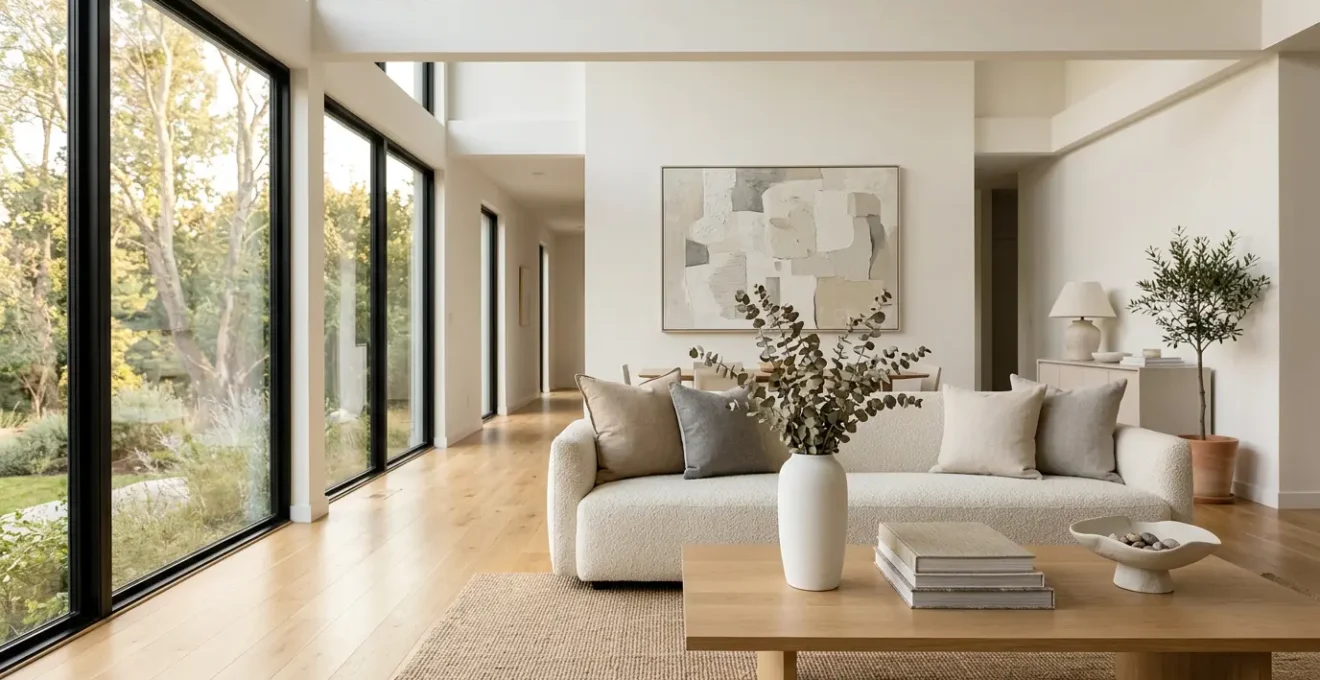
The biggest mistake sellers make is decorating their home instead of marketing their property. Staging is not about personal taste; it’s a cold, calculated financial strategy to maximize your sale price.
- Strategic depersonalization is non-negotiable. You must erase your life story from the property so buyers can mentally write their own.
- Optimizing flow and sightlines creates “psychological square footage,” making spaces feel larger and more valuable than their measurements suggest.
Recommendation: Focus ruthlessly on two goals: eliminating any personal trace of your existence and creating unobstructed pathways. Every decision must serve the buyer’s perception of value, not your comfort.
You’ve decided to sell. Suddenly, the home you love is a product on the market, and every scuff mark feels like a lost dollar. You’ve heard the common advice: ‘declutter,’ ‘paint it beige,’ ‘bake cookies before a showing.’ These are table stakes, not winning strategies. They are the bare minimum, the C-grade work that gets you a passing grade but leaves five figures of equity on the table. To compete effectively, you must think beyond simple tidying.
This guide isn’t about making your home ‘nice’ or ‘cozy.’ It’s about a ruthless transformation. We are going to dissect the process of turning your personal sanctuary into an irresistible, high-value asset. You will adopt the cold, results-oriented mindset of a professional stager, focusing on the psychological triggers and marketing principles that make buyers compete and pay a premium. This is not decoration; this is a commercial exercise designed to maximize your return on investment.
Forget your emotional attachments. For the next few weeks, this is not your home; it’s a product engineered for a quick, profitable sale. We will explore the critical differences between a living space and a staged property, master professional styling techniques that create a luxury feel on a budget, and identify the costly mistakes that can sabotage a sale before the first buyer even walks through the door.
The following sections provide a clear roadmap to executing a professional-level staging strategy. By understanding these core principles, you can take control of your sale and ensure you capture every dollar of your home’s potential value.
Summary: A Professional Framework for Staging Your Home to Sell
- How to Master the “Rule of Three” for Coffee Table Styling?
- The Personal Clutter Mistake That Costs Sellers $10k in Offers
- Staging vs Living: What Are the Key Differences You Must Accept?
- When to Start Staging: The Timeline That Avoids Pre-Listing Panic
- How to Style a Luxury Look Using Only Supermarket Flowers?
- Why Does Poor Flow Reduce Property Value by Up to 15%?
- How to Read a Portfolio to Spot “One-Note” Designers?
- Why Does Hiring an Interior Designer Save Money on Mistakes in the Long Run?
How to Master the “Rule of Three” for Coffee Table Styling?
One of the fastest ways to signal ” professionally styled” versus “amateur hour” is through curated surfaces. A coffee table is a focal point, and mastering its presentation is non-negotiable. The “Rule of Three” is a design principle stating that items arranged in odd numbers are more appealing, memorable, and effective than even-numbered groupings. They create a sense of tension and energy that is more visually interesting. It forces the eye to move around, making the display more engaging.
This isn’t about randomly placing three objects. It’s about creating a balanced, multi-dimensional vignette. The key is to vary the height, shape, and texture of the items to form a cohesive yet dynamic arrangement. Think of it as creating a small, self-contained story that suggests a sophisticated lifestyle—an aspirational narrative for the potential buyer. The goal is to make the surface look intentionally curated, not just a repository for remote controls and mail.
As you can see, the combination of a tall element, a low horizontal element, and a sculptural piece creates a perfect visual triangle. This isn’t just about aesthetics; it’s about control. A perfectly styled coffee table tells a buyer that the entire home is meticulously maintained. Here is the exact formula pros use.
- Item 1 – Height Element: Place a simple vase with tall, thin branches (12-18 inches) at one corner to create vertical interest and draw the eye upward.
- Item 2 – Horizontal Element: Stack two beautiful art or design books flat in the center or opposite corner to provide weight and foundation to the arrangement.
- Item 3 – Sculptural Element: Add something organic or unique (a decorative bowl, piece of coral, small tray with a candle) at the third point to complete the visual triangle.
- Positioning Technique: Arrange the three items so they form a triangle shape when viewed from above, with varying heights creating dynamic movement.
- Spacing Rule: Leave intentional negative space between items so the coffee table doesn’t feel cluttered; buyers need to see usable surface area.
The Personal Clutter Mistake That Costs Sellers $10k in Offers
Let’s be blunt: your personal memories, family photos, and quirky collections are financial liabilities. The single most expensive mistake a seller can make is failing to aggressively depersonalize their space. Buyers cannot envision their own future in a home that is screaming about your past. Every family photo, child’s drawing, or political souvenir is a barrier, reminding them they are intruders in someone else’s life. This isn’t just a feeling; it has a real financial impact. Failing to declutter can result in a lower sale price, with some expert surveys suggesting a clean, depersonalized home can achieve a 3.5% increase in sale price—that’s over $12,000 on a $350,000 home.
This process is called strategic depersonalization. It’s not about creating a sterile, empty box. It’s about editing your personal narrative out of the property to create a clean, aspirational canvas onto which the buyer can project their own dreams. You are removing *your* story to make room for *theirs*. This requires a ruthless and objective eye. If an item tells a story specific to you or your family, it must go into storage. This is not a negotiation.
The Stranger Test in Action: Identifying Personal vs. Aspirational Items
A professional stager uses “The Stranger Test” to help sellers distinguish between distracting personal clutter and appealing aspirational items. The rule is simple: if a stranger couldn’t buy it at a high-end decor store, it’s probably too personal. Family photos, children’s art, and religious symbols must be removed. In contrast, curated items that suggest an elevated lifestyle—like cashmere throws, design books, or high-end kitchen tools displayed minimally—can stay. In one powerful example, a seller removed 27 family photos from walls and surfaces. After this single change, the home received three offers within 48 hours of listing, with multiple buyers commenting on how easy it was to envision their own lives in the space. The absence of a personal story made the home more valuable.
Your sentimentality is costing you money. Pack up the photos, the trophies, and the souvenirs. Your goal is to sell a house, not a shrine to your life.
Staging vs Living: What Are the Key Differences You Must Accept?
To successfully stage your home, you must undergo a fundamental mental shift. You are no longer living in a home; you are merchandising a product. A “living home” is designed for your comfort, convenience, and daily routine. A “staged product” is engineered for one purpose only: to appeal to the broadest possible pool of buyers and command the highest price. These two things are often in direct opposition. What is practical for daily life is frequently a disaster for marketing a property.
This means accepting a temporary period of inconvenience. Furniture will be arranged for optimal flow and photography, not for watching TV. Kitchen counters will be cleared of everything but a few strategic, beautiful objects, forcing you to keep your toaster in a cabinet. Closets will be half-empty to showcase their storage potential, meaning most of your clothes will be in boxes. This feels strange and impractical because it is. You are living on a movie set, and the illusion of a perfect, effortless life must be maintained until the property is sold. The following table breaks down this crucial distinction.
| Aspect | Living Home (Your Comfort) | Staged Product (Buyer Appeal) |
|---|---|---|
| Surfaces | Convenient clutter (mail, keys, appliances) | Curated accessories (3 items max per surface) |
| Scent | Familiar cooking smells, pet odors | Clean, neutral, or subtle natural fragrance |
| Furniture | Arranged for your daily routine | Positioned for flow and sightlines |
| Personal Items | Family photos, kids’ artwork, hobbies | Removed or minimized to 10% of original |
| Closets | Packed with your belongings | 50% empty to showcase storage potential |
| Lighting | Used as needed | All lights on, 3 sources minimum per room |
Accepting this duality is the first step toward a successful sale. Every decision must be filtered through the lens of “what will a buyer see?” not “what is easiest for me right now?” Your comfort is secondary to the buyer’s perception of value.
When to Start Staging: The Timeline That Avoids Pre-Listing Panic
Procrastination is the enemy of profit in real estate. Waiting until the week before photos to start staging is a recipe for disaster, resulting in rushed work, costly mistakes, and a frantic, stressful experience. Professional staging is a systematic process, not a last-minute scramble. A reverse timeline, starting at least eight weeks before your target listing date, is the only way to execute this properly without descending into chaos. This methodical approach ensures each phase is completed without pressure, leading to a superior final product.
Moreover, a well-staged home sells faster. Data consistently shows that properties prepared for market spend less time accumulating costly carrying charges. A report from the National Association of Realtors revealed that 49% of sellers’ agents observed that staging decreased the amount of time a home spent on the market. Starting early isn’t just about reducing stress; it’s a direct strategy for saving money on mortgage, tax, and utility payments for a property that would otherwise sit unsold.
The following countdown provides a professional framework for managing the process. Sticking to this schedule separates the serious sellers from the panicked amateurs.
- Week -8 to -7 (Major Decluttering): Begin the big purge. This is the most time-consuming phase. Pack away 50% of your furniture, clothes, and belongings into offsite storage. Be ruthless in donating or selling items you do not intend to move to your next home.
- Week -6 to -4 (Repairs & Paint): Complete all minor repairs. Patch nail holes, fix leaky faucets, and replace broken light fixtures. Apply a fresh coat of neutral paint to any walls with bold colors, scuffs, or dated finishes.
- Week -3 to -2 (Furniture Arrangement & Styling): With the excess gone, rearrange remaining furniture for optimal flow and to define clear sightlines. Hang art strategically to highlight features, and add essential staging accessories like new throws, pillows, and greenery.
- Week -1 (Final Styling & Deep Clean): This is for final touches. Hire a professional for a deep clean or execute one yourself, covering all surfaces, windows, and floors. Ensure all light fixtures have working, high-wattage bulbs.
- Day of Photography/Showing (60-Minute Countdown): Execute the final checklist. Turn on all lights (minimum 3 sources per room), open all blinds, wipe down all surfaces, hide trash cans and toilet brushes, and remove all traces of pets.
How to Style a Luxury Look Using Only Supermarket Flowers?
Nothing signals life and high-end care in a staged home like fresh flowers and greenery. However, elaborate floral arrangements are expensive and unnecessary. A professional stager knows how to create maximum impact with minimal investment, often using nothing more than what’s available at a local supermarket. The secret isn’t in the expense of the flowers, but in the confidence and intentionality of the arrangement. A cheap, mixed bouquet looks exactly like what it is. A large, single-type bunch of flowers looks like a deliberate, sophisticated design choice.
The strategy is to create a look that feels abundant and curated, not random and sparse. This involves thinking in terms of mass, color, and vessel quality. A cheap vase will make any flower look cheap. Investing in two or three simple, high-quality vases (a tall glass cylinder, a modern ceramic pitcher) that you can use throughout the home is a smart, one-time investment that elevates budget-friendly blooms. This is a high-ROI trick that adds thousands of dollars in perceived value for a minimal outlay.
Follow these professional florist secrets to transform budget flowers into a luxury statement:
- Go Monobotanical & Monochromatic: Buy 15-20 stems of a single flower type in one color (e.g., all white tulips, all yellow daffodils). This creates instant high-end impact that reads as intentional and sculptural, not a random, cheap mix.
- Leverage Greenery Volume: Purchase one modest flower bunch (like white roses or carnations) and pair it with two bunches of inexpensive greenery (eucalyptus, salal, or even well-chosen clippings from your yard). The greenery provides structure, volume, and a sophisticated, organic feel that makes the flower bunch look more substantial.
- Invest in Quality Vessels: A beautiful vase is half the battle. Use simple, high-quality containers like clear glass cylinders, modern ceramic pitchers, or minimalist concrete pots. Always remove and discard the cheap plastic wrap or generic glass vases that flowers come in.
- Height Variation Strategy: Use tall, dramatic arrangements in entryways and on dining tables to create a “wow” moment. Use low, wide vessels on coffee tables to maintain clear sightlines and allow for easy conversation.
- Freshness Maintenance: To maximize your investment, change the water every two days, trim the stems at an angle, and remove any leaves below the waterline to prevent bacterial growth. With proper care, fresh flowers can last 7-10 days.
Why Does Poor Flow Reduce Property Value by Up to 15%?
Flow is the invisible architecture of your home. It’s how buyers move through the space, and it has a profound psychological impact on their perception of size and comfort. Poor flow—obstructed pathways, awkward furniture placement, doors that can’t open fully—makes a home feel cramped, chaotic, and smaller than it actually is. This creates a subconscious feeling of stress and dissatisfaction in buyers, even if they can’t articulate why. This feeling translates directly into lower offers. Real estate analysis confirms this, showing that poor layouts and flow issues can lead to a 5-10% reduction in effective value.
The goal of staging is to create clear, intuitive pathways that guide the buyer effortlessly from one space to the next. You are creating “psychological square footage”—making the home feel more expansive and valuable. This is achieved by pulling furniture away from walls, creating defined conversation areas, and ensuring there are unobstructed sightlines to the best features of each room, like a window with a view or a fireplace. When buyers can move freely and their eyes can travel without interruption, the space feels larger, more luxurious, and ultimately, worth more money.
The image above demonstrates perfect flow. Pathways are wide and unambiguous, and the sightline from the entrance is directed straight to the window, the room’s best asset. This didn’t happen by accident; it was engineered. You must conduct a ruthless audit of your own home’s movement patterns.
Action Plan: Your Home’s Flow Audit
- The Front-to-Back Test: Can you walk from the front door through the main living spaces in a relatively straight, unobstructed line without turning sideways or navigating around furniture? Identify and clear any blockages.
- Door Swing Clearance Check: Open every interior door, closet door, and cabinet. Do they all open a full 90 degrees without hitting furniture? List any that are blocked and rearrange the offending items.
- Furniture Navigation Audit: Can two people pass each other comfortably in hallways and between major furniture pieces? If not, the space is too crowded. Inventory areas that fail this test.
- Sightline Verification: Stand at the entrance of each major room. Is your view of the room’s best feature (window, fireplace) clear and direct? Note any furniture that interrupts this critical first impression.
- Pathway Measurement: Using a tape measure, verify that all main traffic routes are at least 30-36 inches wide. List all pathways that are narrower and plan to widen them by moving or removing furniture.
How to Read a Portfolio to Spot “One-Note” Designers?
Whether you’re hiring a professional or simply studying their work to replicate it, knowing how to critically evaluate a stager’s portfolio is essential. Many so-called “professionals” are one-note wonders, applying the same bland, gray-and-white formula to every property they touch, regardless of its architectural style or target buyer. A truly skilled stager is a design chameleon, adapting their approach to enhance the unique character of each home. Their portfolio should be a showcase of versatility, not a repetitive catalog of the same trendy furniture.
Looking at a portfolio is like an interview. You’re not just looking for pretty pictures; you’re looking for evidence of problem-solving, adaptability, and market awareness. A portfolio filled with nothing but flawless, high-end homes might mean the stager only takes on easy projects and lacks experience with challenging layouts or dated properties. The best stagers are proud to show “before and after” shots because they demonstrate their ability to create value and transform a space. Use the following checklist to dissect a portfolio and separate the true pros from the amateurs.
When vetting a stager or seeking inspiration, look for these red flags and green lights:
- Architectural Empathy Test: Does the portfolio show the same gray-and-white color scheme for a 1920s Craftsman as for a modern glass condo? Red Flag. Great stagers adapt their style to honor each home’s intrinsic character.
- Textural Vocabulary Analysis: Do you see the same sheepskin rug, navy velvet pillows, or decorative accessories repeated across multiple properties? Red Flag. This signals a one-note stager with limited inventory and imagination.
- Before Photo Transparency: Does the portfolio proudly show ‘before’ photos? Green Light. This demonstrates problem-solving skills—making small rooms look big, brightening dark spaces, and defining awkward layouts. Portfolios with only ‘after’ shots may be hiding a lack of real-world experience.
- Style Range Assessment: Look for diversity in color palettes, furniture styles, and price points. A versatile stager should showcase a range of styles like coastal, traditional, modern, and transitional.
- Buyer Profile Adaptation: Check if the staging choices align with the likely buyer for each property. Is a suburban home staged to be family-friendly? Is an urban condo staged with sophisticated minimalism? This shows market intelligence.
Key Takeaways
- Staging is Marketing, Not Decorating: Your primary goal is to create a marketable product, not a comfortable home. Every decision must be ROI-driven.
- Depersonalization is Non-Negotiable: Erase your personal story (photos, collections) so buyers can project their own future onto the space. Your sentimentality costs you money.
- Flow Creates Value: Unobstructed pathways and clear sightlines create “psychological square footage,” making your home feel larger, more luxurious, and more valuable.
Why Does Hiring an Interior Designer Save Money on Mistakes in the Long Run?
The thought of spending money on a professional stager when you’re trying to maximize profit can seem counterintuitive. This is a classic case of a false economy. The cost of professional staging is not an expense; it is an investment with a proven, often substantial, return. Trying to DIY without a clear strategy can lead to costly mistakes: buying the wrong-sized furniture, choosing paint colors that look bad in your home’s lighting, or arranging rooms in a way that kills flow. A professional stager eliminates these risks. They bring an objective, market-trained eye and a warehouse of perfectly scaled inventory, saving you from expensive and time-consuming errors.
The financial argument is overwhelming. The National Association of Realtors reports that 29% of agents reported a 1-10% increase in dollar value for staged homes compared to their unstaged counterparts. On a $500,000 home, that’s a $5,000 to $50,000 return on an investment of just a few thousand dollars. Furthermore, attempting to purchase all the necessary staging items yourself is far more expensive than renting them as part of a professional package.
| Item Category | DIY Purchase Cost | Professional Rental (3 months) | Savings |
|---|---|---|---|
| Living Room Sofa | $1,500 – $3,000 | Included in package | $1,500+ |
| Area Rugs (2-3) | $600 – $1,200 | Included in package | $600+ |
| Artwork & Mirrors (5-7 pieces) | $500 – $1,500 | Included in package | $500+ |
| Lamps & Lighting (4-6) | $400 – $800 | Included in package | $400+ |
| Accessories & Decor | $300 – $600 | Included in package | $300+ |
| Total Investment | $3,300 – $7,100 | $1,500 – $4,000 (3 months) | $1,800 – $3,100 |
The most compelling evidence comes from real-world results, where the cost of staging is dwarfed by the gains in both price and speed of sale, which saves on carrying costs.
The Real Cost of Being on Market: Carrying Costs vs. Staging Investment
A seller listed a $400,000 home with monthly carrying costs of $3,500 (mortgage, taxes, insurance, utilities). After 45 days on the market with no offers, they invested $2,000 in professional staging. The home immediately received multiple offers within 10 days and sold for $420,000—a 5% increase over the list price. The staging investment was recouped many times over: (1) a $20,000 higher sale price, plus (2) $3,500 saved in one month of avoided carrying costs. The total net benefit of staging was $21,500 from a $2,000 investment, representing a staggering 975% ROI. The stager’s objective eye also prevented the seller from making an emotional mistake: keeping an oversized family dining table that blocked flow, which the seller initially refused to remove but ultimately agreed to after seeing the professionally staged layout.
Whether you apply these professional techniques yourself or engage a specialist for maximum impact, the guiding principle remains the same. You must transition from the mindset of a homeowner to that of a strategic marketer. Your bottom line depends on it.