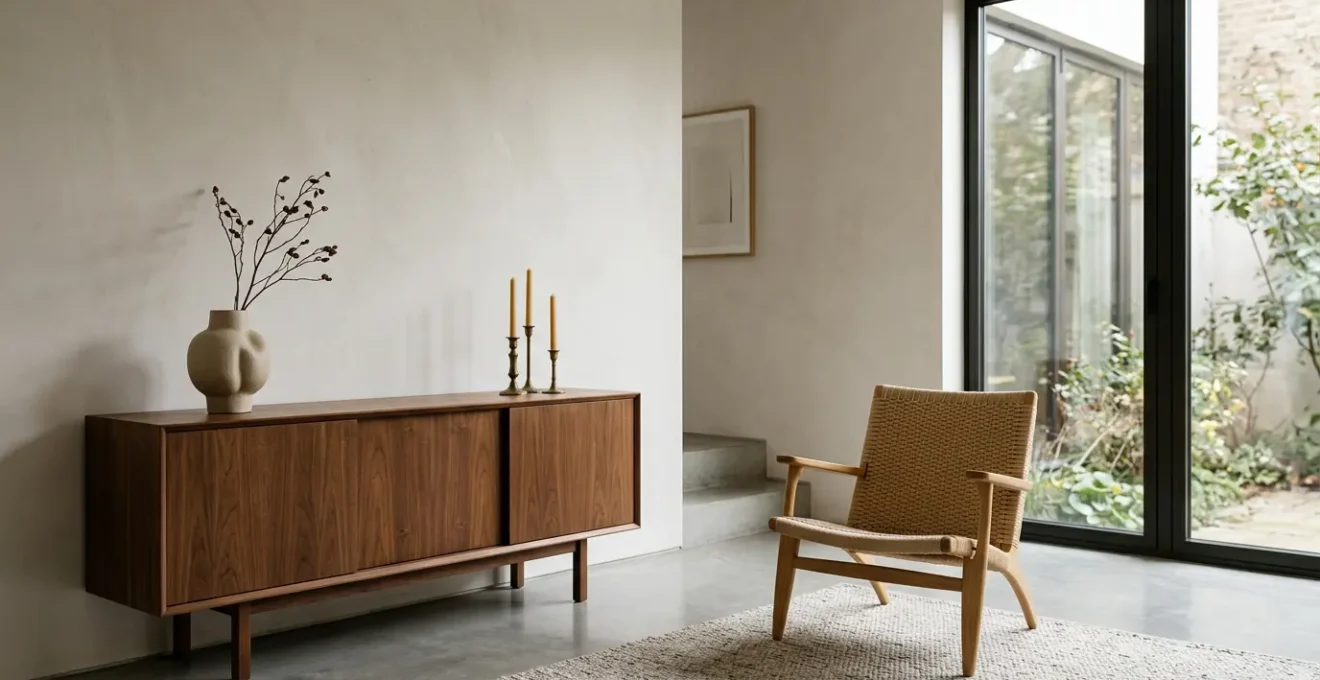
Investing in valuable decor isn’t about buying ‘timeless’ items; it’s about decoding a trend’s origin and speed to separate fleeting hype from future classics.
- “Fast decor” from mass retailers is designed for obsolescence, losing most of its value almost immediately due to poor materials and micro-trend alignment.
- Long-term value lies in macro-trends rooted in cultural shifts, not in social media fads or commercially driven “colors of the year.”
Recommendation: Focus on an asset’s narrative: its material honesty, designer’s legacy, and potential for cyclical resurgence over its current popularity.
The feeling is familiar for any design enthusiast: you acquire a beautiful piece of furniture, a statement lamp, or a rug that perfectly captures the moment. It elevates your space and brings you joy. Yet, a few years later, its aesthetic feels dated, and its resale value on the secondary market is a fraction of what you paid. This isn’t a personal failing; it’s a predictable outcome of a market saturated with “fast decor,” where assets are designed to depreciate from the moment of purchase. Conventional wisdom advises buying “classics” or focusing on “quality craftsmanship,” but this advice is incomplete. It doesn’t explain why some classics hold value while others fade, nor does it provide a framework for identifying the classics of tomorrow.
The real issue is a failure to distinguish between ephemeral trends and foundational market shifts. Most decor advice focuses on what is popular now, without analyzing the forces driving that popularity. Is a trend exploding on TikTok because of an influencer, or is it slowly emerging from architectural journals and artisanal workshops? Is a specific color being promoted because of a genuine cultural shift, or because of a savvy, pre-planned marketing campaign by a color authority? These questions are at the heart of trend forecasting and are crucial for anyone who views their decor not just as decoration, but as a portfolio of assets.
But what if the key to building a valuable collection wasn’t about avoiding trends, but about understanding their velocity and origin? The true art of decor investment lies in decoding a trend’s narrative. This article moves beyond generic advice to provide an analytical framework for predicting market shifts. We will explore the mechanisms that cause rapid depreciation, teach you to spot the signals that differentiate a six-month fad from a ten-year macro-trend, and reveal why certain designer pieces become appreciating assets while others end up as expensive liabilities. By understanding these dynamics, you can shift from being a consumer of trends to a strategic investor in lasting design.
This guide will deconstruct the key factors that determine the long-term value of home decor. We will examine the lifecycle of trends, the value of authenticity, and the strategies for investing in pieces that are most likely to appreciate over time.
Summary: Predicting Decor Market Shifts and Investing in Appreciating Assets
- Why Does “Fast Decor” Lose 90% of Its Value upon Purchase?
- How to Distinguish a 6-Month Fad From a 10-Year Macro Trend?
- Vintage Original vs Modern Reproduction: Which Holds Value Better?
- The Risk of “Color of the Year” Investments for Long-Term Value
- When to Sell Designer Furniture to Maximize Resale Profit?
- The “Trend Trap” That Devalues Collections Within 5 Years
- Why Do Fashion House Home Lines Outperform Generic Luxury?
- How to Invest in Limited Edition Homeware That Retains Value?
Why Does “Fast Decor” Lose 90% of Its Value upon Purchase?
The dramatic value loss of mass-market decor isn’t an accident; it’s an inherent feature of its business model. Unlike heritage furniture designed as a long-term asset, “fast decor” is engineered for rapid, trend-driven consumption. Its value proposition is based on affordability and immediacy, not longevity. This creates a perfect storm for depreciation. The primary driver is material dishonesty. Items are often constructed from MDF, particleboard, and plastic laminates, materials that do not age gracefully. They chip, peel, and warp, ensuring they have little to no appeal on the secondary market after a few years of use.
To understand the financial impact, consider the immediate depreciation of new furniture. While high-quality pieces experience a decline, industry data reveals a 15-20% value loss in the first year for standard furniture. However, as furniture depreciation analysts note, pieces from budget retailers lose value far more aggressively, often becoming nearly worthless after just three to five years. This acceleration is due to the combination of low build quality and their alignment with fleeting micro-trends.
The visual above illustrates this core difference. On one side, you see the integrity of solid wood, with its potential to develop a patina. On the other, the synthetic, disposable nature of composite materials. This material choice is a strategic decision by manufacturers to lock consumers into a cycle of replacement. The piece you buy today is not meant to be cherished for a decade; it’s a placeholder until the next trend cycle, ensuring you return as a customer. This planned obsolescence is the fundamental reason fast decor is a financial liability, not an investment.
How to Distinguish a 6-Month Fad From a 10-Year Macro Trend?
The ability to separate a fleeting fad from a durable macro-trend is the single most important skill for a decor investor. Fads are ephemeral, often driven by social media, while macro-trends are slower, more profound shifts rooted in cultural, technological, and societal changes. The key differentiator is what can be termed “narrative velocity”—the speed and source of a trend’s story. Fads have an explosive velocity, spreading rapidly through platforms like TikTok and Instagram. They are often tied to pop culture moments, celebrity endorsements, or specific aesthetics like “Barbiecore.”
As trend analysts at Lily AI point out, these micro-trends are essentially crazes that may last only for a single season. They create a powerful but short-lived demand that collapses just as quickly, leaving anyone who invested in high-ticket items with an asset that is suddenly out of style. In contrast, macro-trends have a slower, more deliberate narrative velocity. They often begin in niche communities—architecture, high-end art, sustainable technology—and gradually filter into the mainstream over several years. Think of the shift towards biophilic design or the renewed interest in Brutalist architecture. These aren’t overnight sensations; they are slow-burn movements that signal a lasting change in collective taste.
The challenge today is that trend forecasting research confirms that trend cycles are accelerated by social media virality, blurring the lines. To cut through the noise, you must analyze the origin. Is the trend’s story coming from a designer with a long-standing philosophy, or from a 30-second video? A macro-trend has intellectual and cultural roots; a fad has viral momentum.
Action Plan: Differentiating Trend Signals
- Source Tracking: Identify where the trend originated. Is it from an architectural biennial, a material innovation lab, or a viral social media challenge? Document the origin to assess its depth.
- Velocity Audit: Monitor the trend’s spread over a month. Is it appearing everywhere simultaneously (likely a fad) or is its adoption gradual and growing from niche to mainstream (likely a macro-trend)?
- Material & Form Analysis: Does the trend rely on specific, hard-to-replicate craftsmanship and materials (e.g., hand-blown glass), or is it based on a simple color or pattern easily copied by mass-market brands?
- Cross-Industry Check: Look for parallel movements in other fields like fashion, art, and technology. A true macro-trend, like sustainability, will have echoes across multiple creative and industrial sectors.
- Longevity Test: Ask yourself: “Does this aesthetic solve a functional problem or express a deeper cultural value, or does it exist purely for its visual novelty?” Value is tied to meaning, not just looks.
Vintage Original vs Modern Reproduction: Which Holds Value Better?
In the world of decor investment, the battle between a vintage original and a licensed modern reproduction is a constant source of debate. While a new, authorized reproduction from a reputable brand offers pristine condition and a warranty, the vintage original almost always holds superior long-term value. The reason lies in two key concepts: provenance and patina. A vintage piece is a historical artifact. It carries the story of its time, its original owner, and the specific workshop it came from. This narrative, or provenance, cannot be replicated.
Condition is paramount. As antique furniture experts from Value My Stuff emphasize, the fewer changes and repairs a piece has undergone, the more value it will hold. Original upholstery, even if worn, is often more desirable to serious collectors than a brand-new fabric. This is because authenticity is the primary value driver. A modern reproduction, no matter how well made, is still a copy. It lacks the unique history and the subtle imperfections of age that signal its originality. These imperfections, collectively known as patina, are highly prized.
The warm glow on aged brass, the gentle wear on a leather armrest, or the subtle crazing in an old glaze—these are marks of time that collectors pay a premium for. They are tangible proof of the piece’s journey through history. While reproductions may mimic the form, they can never replicate the soul that comes from decades of existence. For the investor, this means a high-quality vintage original from a known designer is a tangible asset that is likely to appreciate, whereas a modern reproduction will begin depreciating the moment it leaves the showroom, just like any new product.
The Risk of “Color of the Year” Investments for Long-Term Value
Every December, the design world awaits the announcement of Pantone’s “Color of the Year.” It immediately appears in magazines, on blogs, and across retail floors. For the untrained investor, buying a major piece of furniture in this color seems like a savvy, on-trend move. In reality, it is one of the riskiest investments you can make. The “Color of the Year” is a perfect example of a commercially manufactured micro-trend, designed for peak velocity and rapid obsolescence.
The key to understanding this risk is to recognize that the “Color of the Year” is not a grassroots cultural phenomenon; it is a brilliant marketing strategy. As an analysis from Quartz reveals, months before the annual unveiling, Pantone’s business team secures licensing agreements with a vast network of companies, from paint manufacturers to home goods retailers. This ensures the chosen hue appears everywhere simultaneously, creating the illusion of a widespread, organic trend. In reality, it’s a top-down commercial push.
The problem for an investor is that this manufactured hype has an extremely short half-life. By the time the next “Color of the Year” is announced 12 months later, the previous one can feel instantly dated. A sofa in “Viva Magenta” or a set of dining chairs in “Peach Fuzz” becomes a timestamped artifact of a specific year. This severely limits its appeal on the secondary market. While incorporating these colors in low-cost, easily replaceable items like pillows or throws is a fun way to stay current, tying a significant capital investment to such a fleeting trend is a recipe for depreciation. True long-term value comes from colors with deeper cultural and historical resonance, not those chosen by a committee for a 12-month marketing cycle.
When to Sell Designer Furniture to Maximize Resale Profit?
Owning a piece of designer furniture is one thing; knowing the optimal moment to sell it is another. Maximizing resale profit requires an understanding of trend cycles and market sentiment. The most powerful force at play is what can be called “cyclical resonance,” the phenomenon where design styles re-emerge in popularity on a predictable schedule. This is not folklore; it’s a well-documented pattern in creative industries. Investing in a piece and selling it a few years later will almost always result in a loss, as the item is still considered “used,” not “vintage.”
The magic number, according to trend researchers, is twenty years. As researchers from Bryant & Stratton College note, the fashion cycle repeating every two decades also holds true for design. A style needs to fall out of favor and lie dormant long enough for a new generation to rediscover it with fresh eyes. The Memphis design of the 1980s, once derided, is now highly sought after by collectors. The sleek, optimistic futurism of the 1960s experienced a massive resurgence in the 1980s and again in the 2000s. The ideal time to sell, therefore, is not at the first sign of a revival, but just as it is approaching its new peak of mainstream popularity.
Case Study: The Frits Henningsen Wing Chair
A prime example of timing and cyclical resonance is the appreciation of mid-century Danish designers. According to a report on high-value antique furniture sales, a high-back wing chair designed by Frits Henningsen in 1935, likely purchased for a modest sum decades ago, recently sold at a Sotheby’s auction for a five-figure sum. The auction house described it as a “rare and important example” of Danish craftsmanship. Its value peaked not in the 1950s, but decades later, when the mid-century modern revival reached its zenith, proving that patience is a decor investor’s greatest asset.
To capitalize on this, an investor must monitor cultural signals. Are museums running retrospectives on a particular designer or movement? Are influential contemporary designers citing that period as an inspiration? These are the leading indicators that a cycle is turning and that the market is ready to pay a premium for authentic pieces from that era.
The “Trend Trap” That Devalues Collections Within 5 Years
One of the most common and costly mistakes a decor enthusiast can make is falling into the “trend trap,” which can be defined as creating an aesthetic monoculture. This occurs when an entire home or a significant portion of a collection is decorated in a single, highly specific, and timely trend. Whether it’s the “farmhouse” look of the 2010s or the more recent “dopamine decor” craze, committing too heavily to one aesthetic identity makes a collection extremely vulnerable to market shifts. When that trend inevitably fades, the entire collection’s value plummets simultaneously.
Social platforms are now driving much of the inspiration behind home décor purchases, turning trends into instant buying decisions.
– Mordor Intelligence market analysts
This trap is exacerbated by the modern media landscape. Social media algorithms are designed to show you more of what you already like, creating an aesthetic echo chamber. This reinforces the idea that a particular style is more dominant and timeless than it actually is. The behavior is reflected in consumer data; a 2023 Consumer Innovation Observatory survey found that a significant portion of consumers prefer replacing decor frequently, driven by this constant exposure to new trends. This creates a market where homogeneity is mistaken for sophistication.
A truly valuable collection, by contrast, is a dialogue between different styles, eras, and designers. It demonstrates a personal point of view, not adherence to a pre-packaged aesthetic. An 18th-century console table can coexist beautifully with a 1970s Italian lamp and a contemporary painting. This diversity is a form of portfolio management. It ensures that the value of the collection is not tied to the fate of a single trend. If one style falls out of favor, the others provide balance and maintain the collection’s overall worth. The key is to buy individual pieces for their intrinsic merit—their design, craftsmanship, and story—rather than for how well they fit into a transient, algorithm-approved look.
Why Do Fashion House Home Lines Outperform Generic Luxury?
In the luxury decor market, a fascinating phenomenon occurs: home collections from established fashion houses like Dior, Gucci, or Hermès often retain their value better than pieces from high-end, furniture-only brands of comparable quality. This isn’t just about brand recognition; it’s about the power of the “provenance premium” derived from a built-in collector ecosystem. A person buying a generic luxury sofa is investing in a single item. A person buying a Hermès Avalon blanket is investing in the entire Hermès narrative.
This dynamic creates a highly motivated and loyal primary and secondary market. Luxury brand researchers have noted that the buyer of a Dior Maison plate is often already a collector of their fashion, bags, or jewelry. This cross-category appeal means the homeware is not just an object; it’s a new entry point into a brand universe they are already emotionally and financially invested in. This is a market segment with immense spending power; according to the Knight Frank Wealth Report, ultra-high-net-worth individuals spent an average of $1.2 million on interior design in 2023 alone.
Furthermore, these fashion houses are masters of narrative and scarcity. Their home collections are often released in limited quantities, tied to specific runway shows or artistic collaborations, which imbues them with a sense of cultural relevance and urgency. A generic luxury brand may produce a beautifully crafted chair, but it rarely comes with the same level of storytelling and built-in demand. The fashion house piece becomes a collectible artifact of the brand’s creative history, ensuring it has a dedicated base of buyers ready to pay a premium for it on the resale market years later. This is the ultimate competitive advantage in the world of luxury assets.
Key Takeaways
- Lasting value is found in macro-trends rooted in cultural shifts, not in fleeting social media fads or commercially-driven “colors of the year.”
- Authenticity is paramount: vintage originals with provenance and patina almost always outperform modern reproductions in long-term value appreciation.
- Avoid “aesthetic monoculture.” A diverse collection mixing styles and eras is more resilient to market shifts than a home decorated in a single, timely trend.
How to Invest in Limited Edition Homeware That Retains Value?
Investing in limited edition homeware seems like a straightforward path to securing an appreciating asset, but not all limited editions are created equal. The key is to look beyond the “limited” tag and analyze the factors that create genuine, long-term scarcity and desirability. The foundational principle, as specialists at Fontaine’s Auction Gallery state, is that rarity drives value. This rarity can stem from the number of pieces produced, but also from the uniqueness of the design, the difficulty of its production, or the fame of its creator.
A successful investment in a limited edition piece hinges on three pillars: the designer’s legacy, the innovation of the piece, and the story behind its creation. A piece from a celebrated designer’s final collection, for example, carries a powerful narrative that will fuel demand for decades. Similarly, an item that pioneers a new material or production technique holds a place in design history that a simple color variation of an existing product does not. Look for editions that are the result of a meaningful collaboration, a significant anniversary, or a breakthrough in design thinking.
Case Study: Mainstream Innovation as a Value Driver
Even mass-market brands can create value through strategic, limited releases that focus on innovation. In a notable 2024 move, IKEA launched a new version of its iconic PAX wardrobe system featuring an innovative, more sustainable, and easier-to-assemble frame. While not a “luxury” item, this type of launch—improving a core product with tangible benefits—demonstrates how brands can maintain relevance and create desirability around specific product generations, making them more valuable on the secondary market than their standard predecessors.
Ultimately, a limited edition piece must stand on its own merits. Is it a beautiful, functional, and significant object, even without the “limited” label? If the answer is yes, its scarcity will act as a powerful multiplier on its intrinsic value. The goal is to acquire a piece of design history, not just a product with an artificially constrained supply. This is the difference between a speculative purchase and a true long-term investment in functional art.
By applying this analytical framework—evaluating narrative velocity, material honesty, and provenance premium—you can transform your approach from passive consumption to strategic acquisition. The next step is to begin analyzing your own collection and future purchases through this lens to build a portfolio of decor that not only enriches your life but also grows in value.